Salubrious was founded on a simple belief: the people doing the work, the local pharmacist and the small-town doctor, already know what their community needs. They lack tools, not insight. We build the tools.
At Salubrious, we believe the way to truly transform and have a lasting impact on the healthcare ecosystem in India is by first focusing on rural India, where more than two-thirds of Indians reside, and who stand to benefit the most from the adoption of technology.
That this is a major opportunity is known to all. We believe it's a challenge worth doing. Our mission is to provide holistic healthcare solutions to people in rural areas at a single point, while delivering an experience that gets them engaged in their own health.
"Healthcare is ultimately about people, not technology. Our vision is to strengthen primary healthcare by connecting patients, providers and communities through technology that works with the way people already access healthcare."
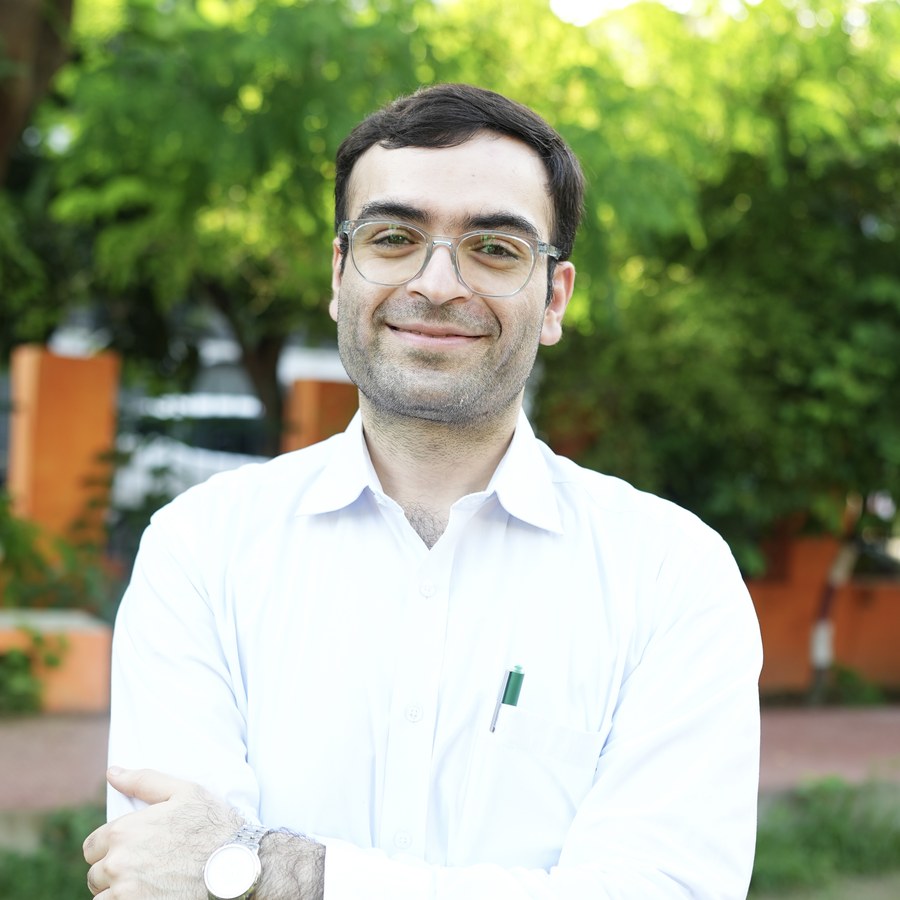
Shubhang's university research was a neonatal-care pulse oximeter designed for under-resourced hospitals. Devices built to work where the power is unreliable and the nearest technician is a district away. The work left him with the question that became the company: if the technology already exists, why isn't it reaching the people who need it?
Before founding Salubrious in August 2016, he worked as a Research & Development engineer at Eureka Forbes, building consumer hardware that had to survive Indian conditions. It left him with an instinct for the real environment over the spec sheet that still runs through every product here.
He leads product, engineering, and the company's direction. His current focus is integrating AI with clinical learnings alongside practising doctors, using a decade of consultation data to support clinical judgement rather than replace it, and building the next set of platforms for founders and small operators.
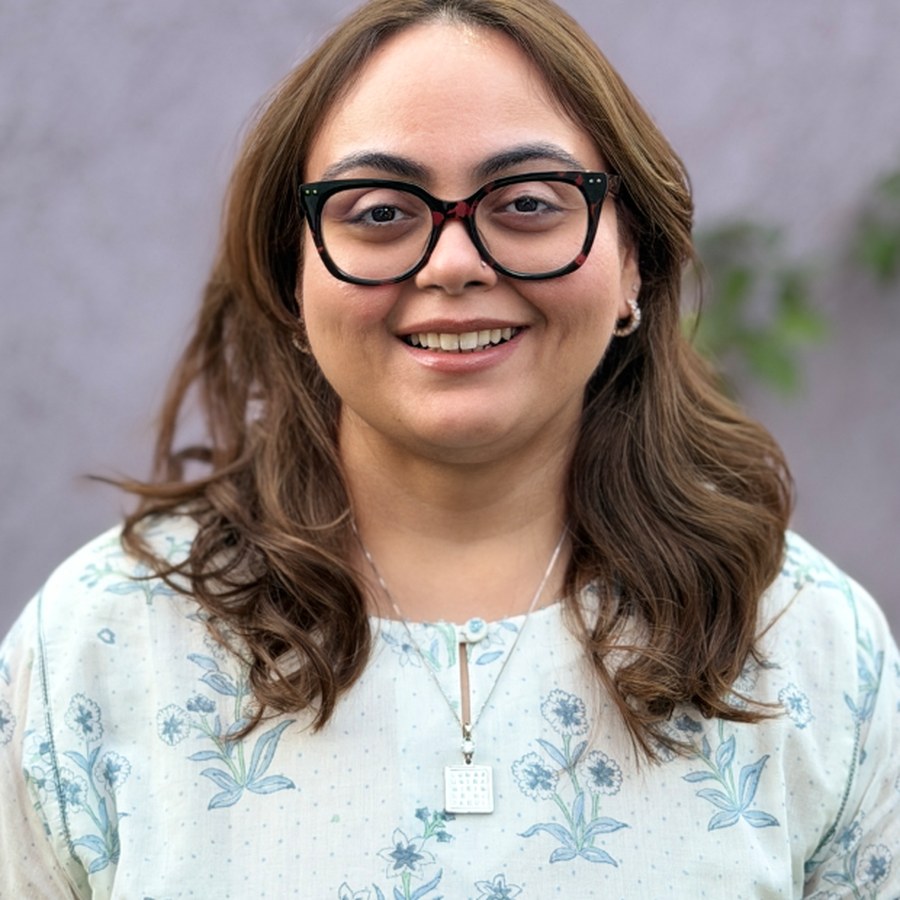
Before Salubrious, Smriti spent over a decade running a Maruti Suzuki dealership business in Uttar Pradesh: large-scale customer operations, regional distribution, and workforce management. That experience shaped the company's ground-led expansion model. She joined full-time in 2022 to build something with longer-range impact.
Her work now sits on the demand side of the problem: getting more women to seek medical advice, and to seek it sooner. More than 56% of OCM's patients are women, and she is pushing that further through awareness drives on routine check-ups, preventive screening, and the everyday symptoms families are taught to wait out. In most households the woman is the last person to be taken to a doctor, and usually the first to notice something is wrong.
Alongside this she leads operations, partnerships, and network growth. Named an ET Young Industry Leader in 2024, she brings a builder's mindset to a sector that often defaults to incrementalism.
August 2016. Shubhang founds Salubrious Technologies out of a question raised by his university research on a neonatal-care pulse oximeter for under-resourced hospitals: if the technology already exists, why isn't it reaching the people who need it? The gap was never invention. It was infrastructure.
The first answer is physical. Standalone mobile e-clinics go into Uttar Pradesh, taking diagnostics and consultations directly into villages. The model works, but every clinic needs our vehicle, our staff, our presence. It reaches people; it does not scale.
We stop building parallel infrastructure and start strengthening what already exists. The local pharmacy is already trusted, already open, already the first place people go. We begin partnering with pharmacy owners rather than competing with them. This is the decision the company is built on.
Years of unglamorous work: health camps, awareness drives, and women's health education across UP's hinterland districts. Trust in rural healthcare is not marketed into being. It is earned in person, over years.
Two hundred pharmacies across Uttar Pradesh are operating as e-clinics, reaching hinterland districts where the nearest specialist is several hours away.
Smriti Tandon joins as co-founder & CEO, bringing a decade of running a Maruti Suzuki dealership network. Operations, partnerships, and multi-state expansion begin in earnest. The model leaves Uttar Pradesh.
Repeat consultations climb. The Patient Relief Team has tracked prescription adherence and patient outcomes since day one, and by now the discipline shows in the numbers: an 88% relief rate across consultations. A consultation that does not change the outcome is not care. It is a transaction.
We run medical camps along the Amarnath Yatra route. Serving pilgrims at altitude, far from any hospital, makes the case plainly: access is not a rural problem or an urban one. It is a distance problem. The same year we pilot 120by80, a doctor-first platform built to help practitioners grow their practice and to form a peer cohort of specialists.
The Online Chikitsa Mitra mobile app launches for rural and semi-urban users, so that patients who can use a phone are no longer dependent on an intermediary to make decisions about their own health. Consultations cross 150,000.
Online Chikitsa Mitra, 120by80, and the pharmacy Billing & Stock Management operate as one ecosystem. Each new partner makes the next one more valuable.
Whether you're a partner, a patient advocate, a journalist, an engineer, or someone who's been quietly running a community clinic for fifteen years, we'd love to hear from you.